
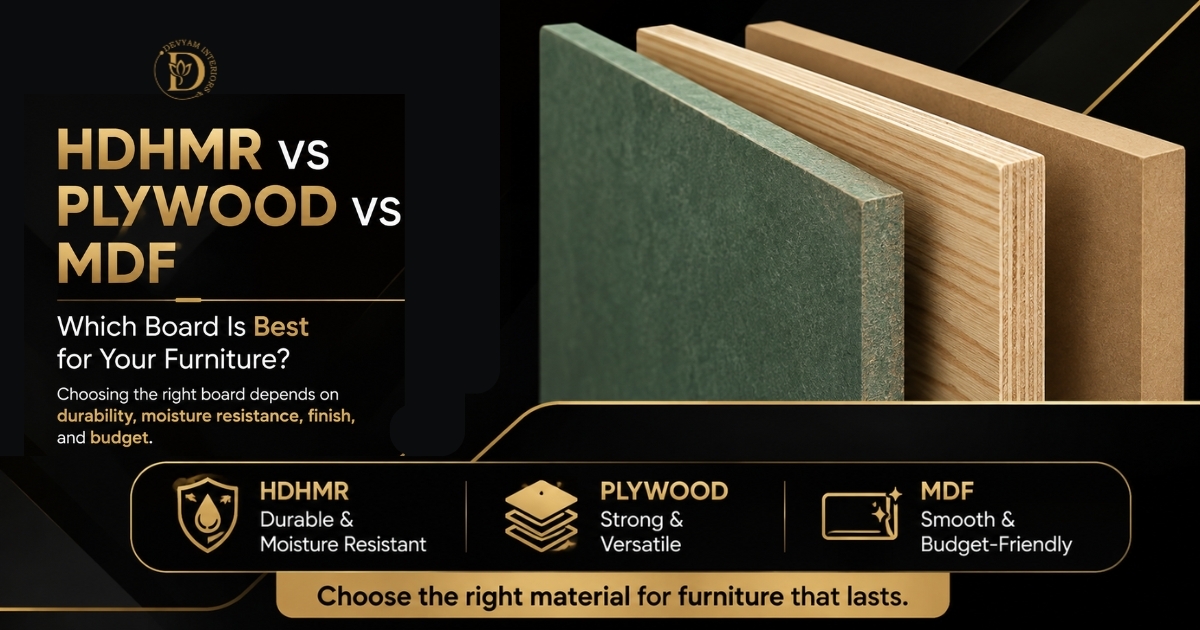
Picking the right board for your furniture sounds simple, right up until you actually start comparing materials. One person swears by plywood. Someone else insists HDHMR’s the better call. Another person tells you MDF’s fine if you’re watching the budget. Before long, you’re more confused than when you started asking around. Truth is, there’s no single material that’s perfect across every project.
The right pick really depends on where the furniture’s going, how much wear it’ll take, and – obviously – what you’re willing to spend. Which is exactly why understanding HDHMR vs Plywood matters before committing to anything, especially if you’re investing in modular interior design meant to last for years. Let’s break it down properly.
Understanding HDHMR vs Plywood
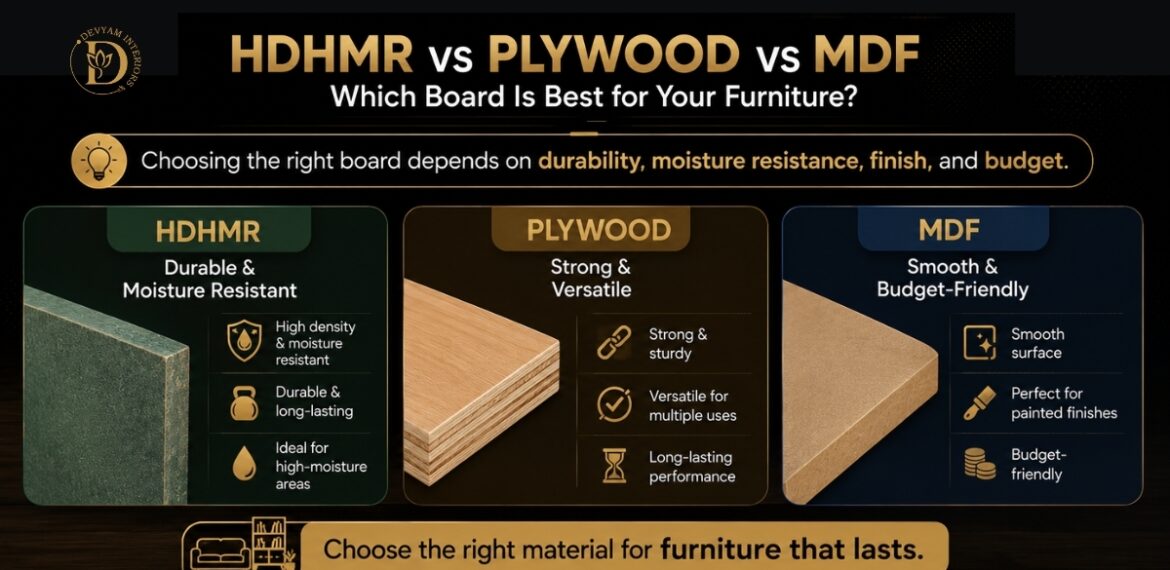
Before comparing the two, it’s worth knowing what these materials actually are. HDHMR stands for High Density High Moisture Resistant board. As the name suggests, it’s engineered specifically for higher density and better moisture resistance than a lot of conventional engineered wood. You’ll find it commonly used in kitchens, wardrobes, and other spots where durability genuinely matters.
Plywood, on the other hand, comes from bonding multiple layers of natural wood veneer together. Those layers alternate in direction, which is exactly what gives plywood its reputation for strength and stability. When it comes to HDHMR vs Plywood, both perform genuinely well – they just shine in different situations.
Where Does MDF Fit Into The Picture?
Another material that comes up constantly is MDF – Medium Density Fibreboard. Unlike plywood, MDF is manufactured from fine wood fibres compressed with resin under high pressure. What you get is a smooth, uniform board that’s easy to cut, paint, and shape into just about anything.
That’s a big reason decorative furniture leans so heavily on MDF board. It delivers a clean finish and works well for detailed designs, wall panelling, and painted furniture where appearance genuinely matters most.
That said, MDF isn’t built for every application. Spots that see frequent moisture or heavy loads generally call for something stronger.
Strength Isn't The Only Thing That Matters
A lot of people assume the strongest board automatically wins. It doesn’t really work that way, though. A kitchen cabinet, a bedroom wardrobe, and a decorative TV unit all need different things. One might need excellent screw-holding strength; another just needs a smooth finish and good looks. Which is exactly why material choice should match what the furniture’s actually for.
Take an HDHMR board, for instance – it’s often preferred in humid spaces because it’s built to handle moisture better than standard engineered boards. Plywood, meanwhile, stays a trusted pick for heavy-duty furniture thanks to its structural strength and long-term durability. Neither material wins outright across the board. They’re just built to solve different problems.
What About Moisture Resistance?
If there’s one spot where confusion tends to creep in, it’s moisture protection. A lot of people assume all engineered boards handle water the same way. They really don’t. A standard MDF board can swell or lose strength over time if it’s exposed to moisture regularly. That’s why it generally suits dry indoor spaces better – bedrooms, living rooms, decorative wall units, that sort of thing.
An HDHMR board, though, is specifically built to perform better in humid conditions. It’s not waterproof, to be clear, but it handles moisture noticeably better than regular MDF, which is exactly why it’s popular for kitchens, utility areas, and wardrobes. Plywood holds up well too, particularly when you’re using moisture-resistant or marine-grade variants. That’s a big part of why the HDHMR vs Plywood debate keeps going. Both materials are genuinely dependable – the better option just comes down to where they’ll actually be installed and what conditions they’ll face day to day.
So, Which Material Should You Choose?
There’s no single winner here, really, because every project’s different. After a smooth surface that’s ideal for painted finishes and decorative work? MDF remains a solid, practical pick. If moisture resistance matters more, HDHMR offers a real advantage over standard MDF while still keeping a clean finish that suits modern interior designs well.
Plywood continues to be the go-to for furniture that needs to carry heavier loads or hold up through years of regular use. The decision gets a lot simpler once you stop asking “which material’s best?” and start asking “which material’s best for this particular spot?” That’s usually where the right answer actually shows up.
Final Thoughts
The whole HDHMR vs Plywood conversation was never really about proving one material beats the other. Each board carries its own strengths, limitations, and situations where it genuinely excels. Understanding where HDHMR, plywood, and MDF each perform best helps you make smarter interior decisions while dodging unnecessary costs down the line. Get the board choice right at the planning stage, and you’ll see it pay off in durability, appearance, and long-term performance.
For homeowners after functional, long-lasting interiors, Devyam Interiors helps recommend the right materials based on your space, design preferences, and how you’ll actually be using it day to day.
FAQs
Is HDHMR better than plywood for modular kitchens?
Both hold up well, honestly – it really comes down to what you actually need. Comparing HDHMR vs Plywood, HDHMR tends to get the nod in higher-humidity spaces, while plywood remains a strong choice for heavy-duty cabinetry that needs serious strength and long-term structural stability.
Is MDF suitable for all types of furniture?
Not always, no. MDF works best for indoor furniture that needs a smooth, painted finish or detailed decorative work. It performs well in dry spaces, but anywhere exposed to frequent moisture or heavy loads generally does better with something stronger, built for more demanding use.
What is the difference between MDF and plywood?
The core difference in MDF vs. plywood really comes down to how they’re made and where they end up being used. MDF gives you a smooth, uniform surface that’s easy to machine, while plywood brings greater strength, durability, and better screw-holding capacity for structural furniture built to last.
Is HDHMR completely waterproof?
No, not quite. HDHMR is moisture-resistant rather than fully waterproof. It performs noticeably better than conventional engineered boards in humid conditions, which is why it suits kitchens and wardrobes so well. Still, continuous water exposure is worth avoiding to get the most out of its lifespan.
Why is moisture resistance important when choosing furniture boards?
Going with a proper moisture-resistant board helps cut down swelling, warping, and general damage that humidity causes over time. It matters even more in kitchens, utility rooms, and wardrobes, where regular moisture exposure can genuinely affect how long furniture lasts and how good it continues to look.